
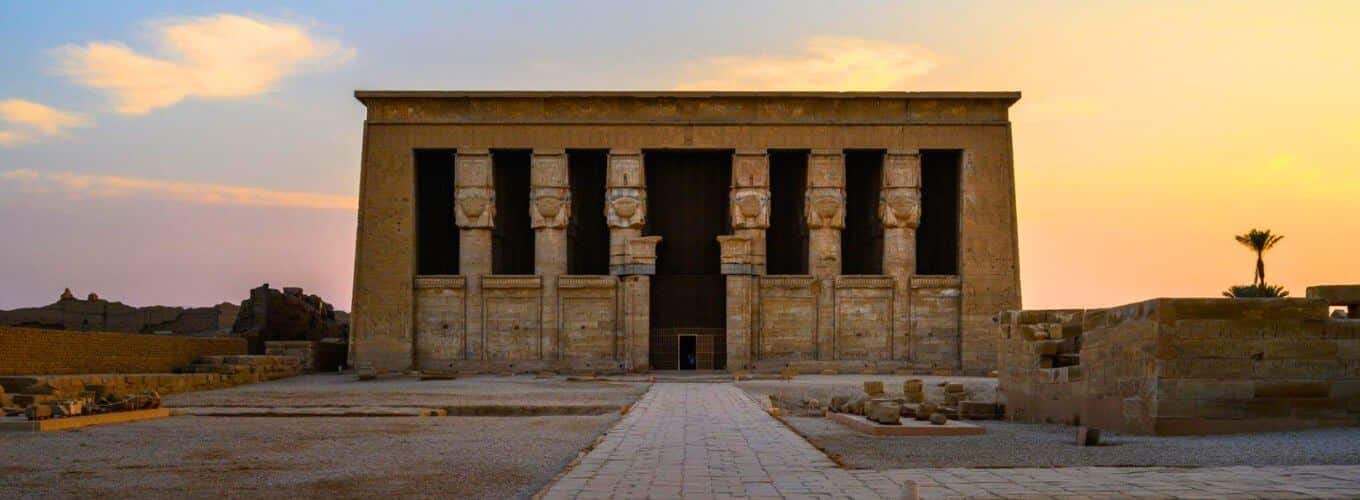
Standing on the west bank of the Nile near Qena, Dendera Temple is one of the most complete and visually powerful temples in Egypt. While Luxor’s monuments impress through scale and fame, Dendera offers a quieter, more immersive experience—one that complements the grandeur of Nile River Cruises rather than competing with it. Colours still cling to the ceilings, reliefs remain sharply carved, and entire spaces—crypts, roof chapels, and astronomical chambers—are preserved in a way few other temples allow.
For travellers planning tours with nile cruise, Dendera fills a valuable gap in a Luxor-based itinerary. It sits beyond the usual flow between the Valley of the Kings and Karnak Temple, making it ideal for visitors who want to go deeper than the standard highlights. Close enough for a half-day visit yet distinct in atmosphere and symbolism, Dendera rewards those who want to see ancient Egyptian art in context rather than imagine it from fragments.
Key Takeaways
- What it is: A late Ptolemaic–Roman temple dedicated to Hathor, goddess of love, music, healing, and cosmic order.
- Why it’s special: Exceptionally preserved ceilings, accessible roof chapels, and crypts with rare reliefs—features missing from many Nile temples.
- Location reality: About 1–1.25 hours north of Luxor by road; best done as a half-day or paired intelligently with Abydos.
- Time needed: 90 minutes for highlights; 2–3 hours for a deeper visit, including crypts and roof.
- Best time to visit: Mid-morning to early afternoon for interior light; earlier in winter, slightly later in summer.
- Crowd levels: Noticeably quieter than Luxor temples; large tour buses are uncommon.
- Who should prioritise it: Repeat Egypt travellers, art/astronomy enthusiasts, and Nile cruise guests with an extra Luxor day.
Where Is Dendera Temple, and Is It Worth the Trip from Luxor?
Dendera Temple sits just outside the modern town of Dendera, near Qena, roughly 60 km (37 miles) north of Luxor. By private car, the drive typically takes 1 to 1¼ hours, depending on traffic leaving Luxor and the time of day. There’s no river docking here, so visits are always by road—one of the reasons the site remains quieter than the major east and west bank temples.
From an itinerary point of view, the question isn’t distance—it’s value. Dendera offers a fundamentally different temple experience from Karnak, Luxor Temple, or the Valley of the Kings. Instead of fragmented ruins and reconstructed columns, you step into a largely intact building where ceilings are still in place, reliefs remain sharply carved, and movement through inner chambers feels deliberate and ritualistic. Many travellers tell us it’s the first time an ancient Egyptian temple feels enclosed rather than monumental.
Dendera vs Luxor Temples: What Feels Different on the Ground
Luxor’s temples impress through scale, axial processions, and open courtyards shaped by successive dynasties. Dendera, by contrast, feels immersive and inward-looking. You spend more time inside—looking up at painted ceilings, studying astronomical scenes, and moving through darker spaces like crypts and stairways. The experience is slower, quieter, and far more tactile, especially for photography and close observation.
Who Should Prioritise Dendera (and Who Can Skip It)
Dendera is especially rewarding if you:
- Have already seen Luxor’s core highlights
- Enjoy well-preserved reliefs, colour, and symbolism
- Are interested in ancient astronomy, ritual spaces, or Hathor’s cult
If this is your first-ever visit to Egypt and time in Luxor is very limited, focusing on Karnak, the Valley of the Kings, and Luxor Temple may make more sense. But with even half a spare day, Dendera adds depth rather than repetition—and often becomes one of the most memorable stops.
Dendera Temple History in One Clear Timeline
Dendera isn’t important because it’s old—it’s important because it’s coherent. What you see today largely belongs to a single, well-organised building program, which is why the temple feels complete and readable compared to many multi-period sites along the Nile.
Hathor at the Center: Why This Goddess Shapes Everything You See
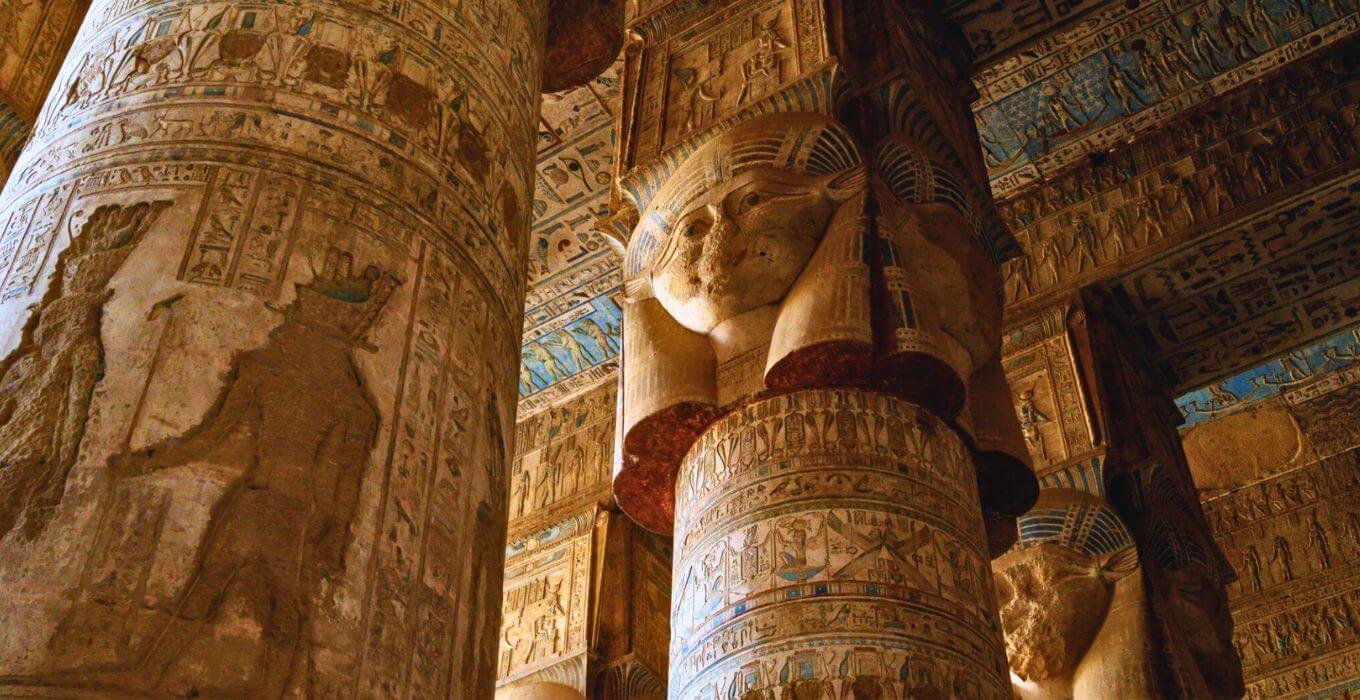
The temple is dedicated to Hathor, goddess of love, music, joy, healing, and cosmic harmony. This matters on the ground: Hathor’s cult emphasised sound, rhythm, fertility, and the sky, which explains the musical imagery, the softness of many reliefs, and the strong astronomical focus on ceilings and roof chapels. Unlike war-oriented temples, Dendera’s iconography feels celebratory and protective rather than aggressive.
Built Late, Preserved Better: The Ptolemaic–Roman Phase
Most of the standing temple was constructed during the Ptolemaic period and completed under early Roman emperors (1st century BCE–1st century CE). Because it was built late, Dendera benefits from:
- Fully developed stone-cutting techniques
- Dense, deeply carved reliefs
- Complex interior planning (crypts, staircases, roof shrines)
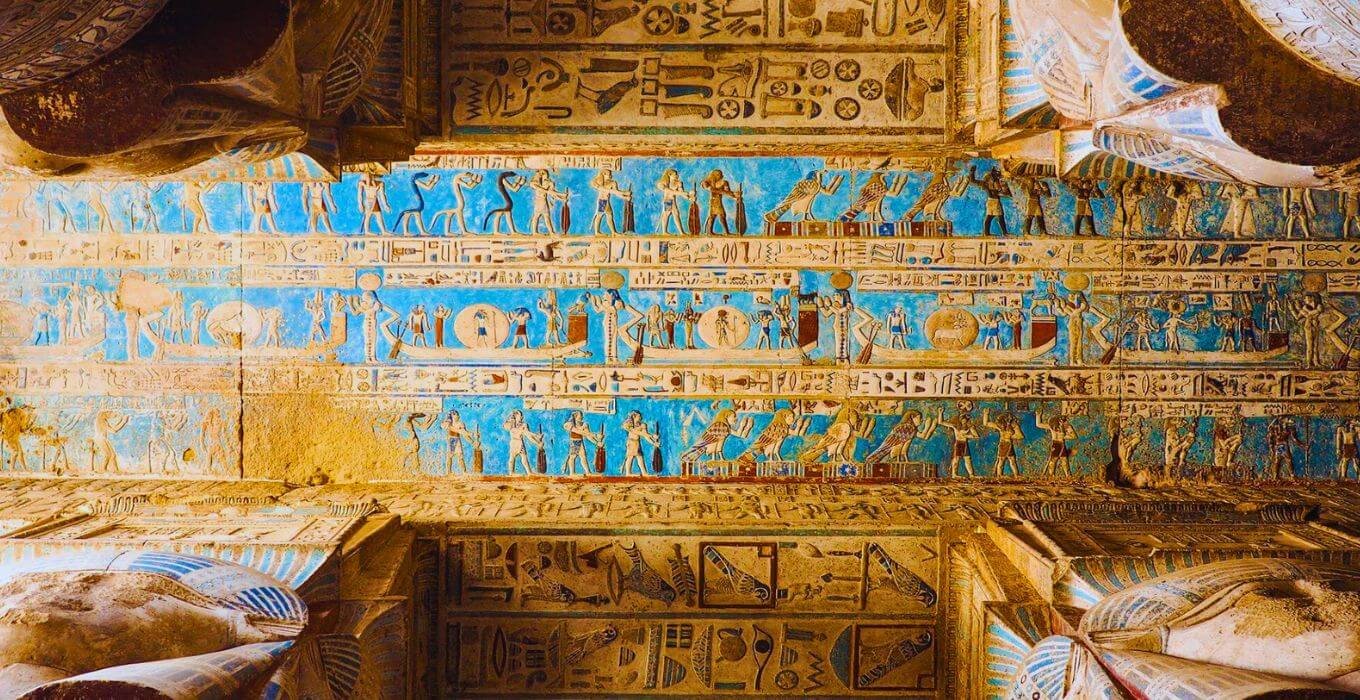
Crucially, the temple was gradually buried by sand and settlement after antiquity. That accidental burial protected ceilings and paint from centuries of weathering—one of the main reasons colour survives here so vividly.
The Dendera Zodiac: What It Is—and What It Isn’t
One ceiling relief became famous far beyond Egypt: the Dendera Zodiac, a circular astronomical scene showing constellations and planetary figures. In the 19th century, it was removed and taken to Paris, where it remains today in the Louvre Museum.
What visitors see at Dendera now is a replica in its original position, which is actually helpful—you can understand the zodiac in context, surrounded by related sky imagery. Importantly, this scene reflects a blend of Egyptian tradition and Greco-Roman astronomical knowledge, not evidence of lost civilizations or advanced technology. Its value lies in showing how late Egyptian priests understood and mapped the cosmos.
What to See Inside Dendera Temple Complex (A Step-by-Step Walking Route)
A visit to Dendera works best when you move from light to shadow, then back to the sky. The architecture is intentional, and following that rhythm helps the temple make sense—especially on a first visit.
The Great Hypostyle Hall (Start Here, and Look Up)
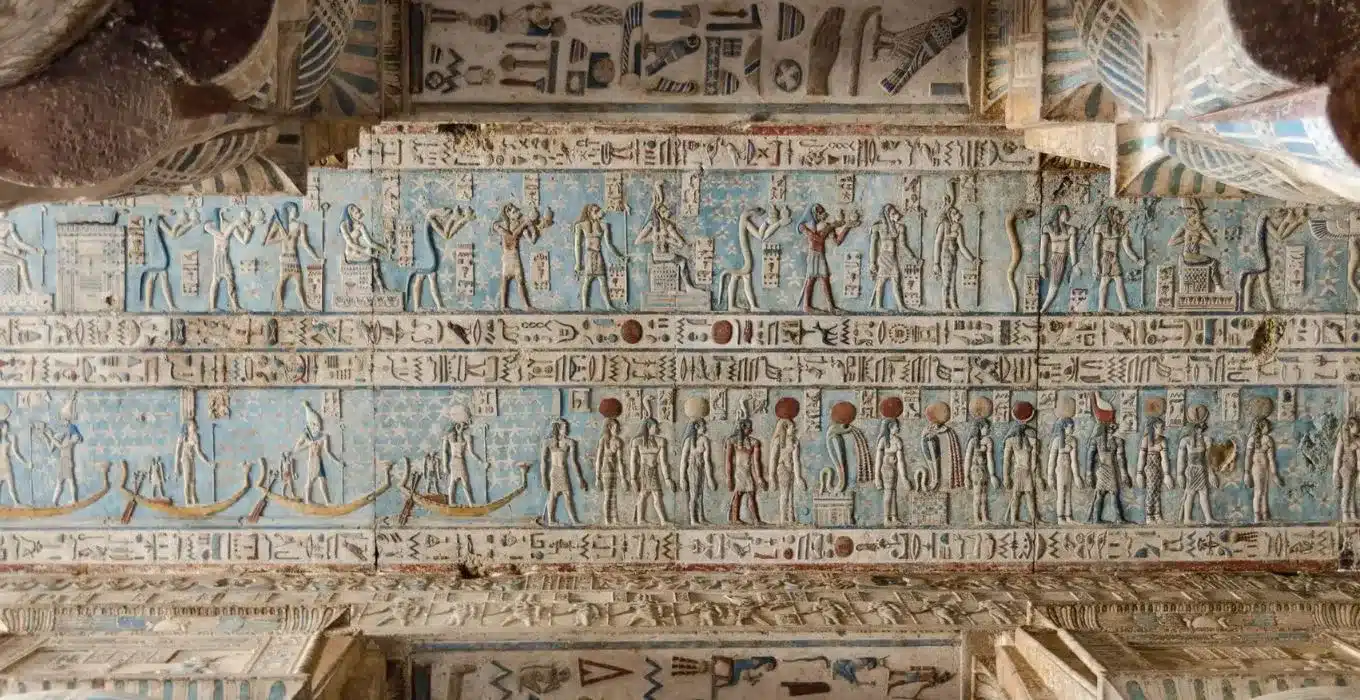
You enter directly into the vast hypostyle hall, and this is where most visitors underestimate the site. The columns are impressive, but the real story is above your head. The ceiling is densely carved with astronomical and religious scenes, and traces of original colour remain—deep blues, reds, and yellows that rarely survive elsewhere. Spend time here before moving on; once you enter darker spaces, this brightness becomes a reference point.
Inner Chambers and Sanctuaries (Moving Inward)
From the hypostyle hall, doorways lead into progressively smaller rooms. Light fades, ceilings drop slightly, and reliefs become more ritual-focused. These chambers were not public spaces; they were designed for priests and controlled ceremonies. Notice how the imagery shifts from grand, outward-facing scenes to intimate offerings and symbolic acts. This transition is key to understanding how the temple functioned, not just how it looked.
The Crypts (Don’t Skip These if Accessible)
Hidden within the temple walls are narrow crypts carved with some of the most intriguing reliefs at Dendera. These were storage and ritual spaces, not passageways, which explains their tight proportions. Visitors often fixate on a few famous scenes, but the broader takeaway is how compressed and deliberate these spaces feel—everything here was meant to be protected, concealed, and revealed only at specific moments.
The Roof and Astronomical Chapels (Finish Above)
Climbing to the roof changes the experience entirely. The air opens up, the Nile plain stretches out, and the temple’s astronomical purpose becomes clear. Roof chapels depict star constellations, solar cycles, and ritual calendars. This is also where the famous zodiac scene belongs contextually—not as a standalone curiosity, but as part of a wider sky-focused program. Late morning to early afternoon usually offers the best balance of light and comfort.
The Mammisi (Birth House) and Secondary Structures
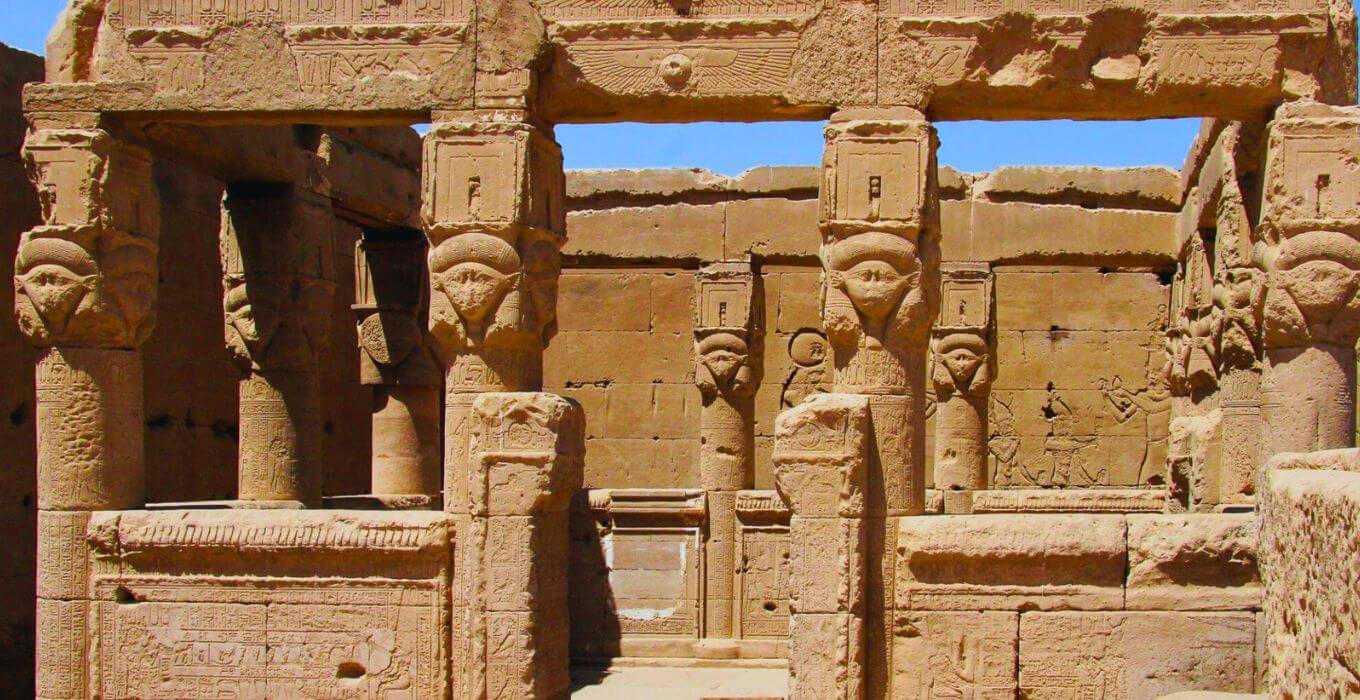
Before leaving, step into the mammisi just outside the main temple. These smaller structures often get rushed, but they explain the mythological birth and renewal themes central to Hathor’s cult. Ten minutes here adds narrative closure to the visit.
Quick Checklist: Details Many Visitors Miss
- Hathor-faced column capitals at different heights
- Rope-like stone mouldings symbolising protection
- Subtle differences in carving style between rooms
- Staircases that control movement and visibility
How to Visit Dendera Temple: Tickets, Hours, Time Needed, and What to Bring
Dendera is easy to visit logistically, but a little planning makes the difference between a rushed stop and a rewarding experience. Because the site sits outside the main Luxor sightseeing circuit, timing and preparation matter more than at city-center temples.
How Long to Budget (and What Changes with More Time)
For most travellers, 90 minutes is enough to cover the hypostyle hall, inner chambers, roof, and a brief look at the mammisi. If you’re travelling with a knowledgeable guide or have a strong interest in symbolism and astronomy, 2–3 hours allows time to slow down in the crypts and really read the ceilings without feeling pressed. Anything shorter than an hour usually feels incomplete.
Opening Hours and Ticketing Basics
Dendera generally opens daily from early morning to late afternoon. Entry tickets are purchased on site, and access to the main temple, roof, and crypt areas is typically included under the standard ticket. Hours can shift slightly by season or public holidays, so confirming the same day—especially when pairing Dendera with Abydos—is sensible practice.
Best Time of Day to Visit
Mid-morning through early afternoon tends to work best. At this time, sunlight reaches deeper into the hypostyle hall, bringing out ceiling colour and relief detail. Early mornings are quieter but darker inside; late afternoons can mean harsher roof light and more wind, especially in winter.
What to Bring Specifically for Dendera
Dendera is largely flat and enclosed, but a few items make the visit more comfortable:
- Comfortable shoes for stone floors and stairways
- A light torch or phone light for crypt reliefs
- Water and sun protection for the roof and outer court
- A light layer in winter—roof areas can be surprisingly windy
Photography and On-Site Etiquette
Photography for personal use is usually allowed without flash, but expectations should be realistic: some interior spaces are dim, and guards may restrict access to certain rooms depending on conditions. Moving slowly, keeping voices low, and avoiding flash preserves both the atmosphere and the artwork.
Best Ways to Visit Dendera from Luxor (Private Car, Tour, or Add-On Day)
Because Dendera lies outside Luxor’s core sightseeing zone, how you visit matters as much as when. The goal is simple: arrive unhurried, spend meaningful time inside the temple, and return without compressing the rest of your Luxor plans.
The Clean Half-Day Plan: Dendera Only
For most travellers, this is the smoothest option. A private car leaves Luxor in the morning, reaches Dendera in time for good interior light, and returns by early afternoon. This format works especially well if you’ve already covered Karnak and the Valley of the Kings, or if you’re fitting Dendera into a packed Luxor stay. It keeps the visit focused and avoids “temple fatigue.”
The Full-Day Combo: Dendera + Abydos (For the Right Traveller)
Pairing Dendera with Abydos Temple creates one of Upper Egypt’s most rewarding days—but it’s not for everyone. The drive is longer, and the day is full. What you gain is contrast: Dendera’s enclosed, celestial focus balanced by Abydos’s narrative reliefs and royal ideology. This combination suits experienced travellers, history-focused visitors, and anyone returning to Egypt for a deeper second visit.
Guided Tour vs Independent Driver
An independent driver gets you there efficiently, but Dendera is a site where context changes what you see. Without explanation, crypts and ceiling scenes can feel mysterious but abstract. With a knowledgeable guide, symbolism, movement, and ritual suddenly align. For many visitors, this is one of the few temples where a guide meaningfully elevates the experience rather than simply managing logistics.
Why Large Group Tours Rarely Shine Here
Dendera rewards slow movement and time spent indoors. Large group tours often compress the visit to fit rigid schedules, limiting roof or crypt time. That’s why Dendera is best experienced privately or in very small groups, where pacing matches the architecture.
Dendera Temple for Nile Cruise Travellers: When It Fits and When It Doesn’t
For Nile cruise travellers, Dendera is never a “standard” stop—and that’s exactly why it works so well when chosen deliberately. The key is understanding cruise timing realities rather than trying to force Dendera into a day already built around temples closer to Luxor.
If You’re Cruising Luxor ↔ Aswan
Most cruises allocate one full day and one night in Luxor. That day is usually consumed by Karnak, Luxor Temple, and the West Bank highlights. Adding Dendera on top of this is rarely comfortable. Where Dendera fits best is outside the cruise program—either:
- Before embarkation (early arrival in Luxor)
- After disembarkation (extending your Luxor stay by half a day)
This approach preserves the cruise rhythm while still allowing a meaningful Dendera visit.
Docking and Timing Realities (Why Many Itineraries Skip It)
Cruise schedules are influenced by lock timings, river traffic, and coordinated convoy movements. Because Dendera requires a road transfer and several hours on site, it doesn’t align well with fixed cruise departure windows. That’s why you’ll rarely see it listed as an included excursion—even on higher-end ships.
When Dendera Becomes the Right Choice
Dendera is an excellent addition if:
- You’ve already seen Luxor’s main temples on a previous trip
- You have an extra morning or afternoon in Luxor
- You prefer quieter, enclosed monuments over large open complexes
In these cases, Dendera often becomes the highlight of Upper Egypt—not despite being outside the cruise route, but because of it.
FAQs About Dendera Temple
Is Dendera Temple the same as the Temple of Hathor?
Yes. Dendera Temple is the main Temple of Hathor, and the terms are often used interchangeably. The wider site is called the Dendera Temple Complex, but the large, well-preserved structure visitors explore is Hathor’s temple.
How far is Dendera Temple from Luxor?
By road, Dendera is about 60 km (37 miles) north of Luxor, with a typical drive time of 1 to 1¼ hours each way. There is no river access, so visits are always by car.
How much time do you really need at Dendera Temple?
Plan 90 minutes for a highlights visit covering the hypostyle hall, inner chambers, roof, and mammisi. Allow 2–3 hours if you want time in the crypts and a slower, more interpretive walk through the temple.
Can visitors go into the crypts and onto the roof?
In most cases, yes. Access to both the crypts and the roof chapels is included with the standard ticket, subject to on-site conditions. These areas are a major reason Dendera stands out from other Egyptian temples.
Is Dendera Temple suitable for first-time visitors to Egypt?
It can be, but it’s most rewarding for travellers who already plan to spend time in Luxor or who have a specific interest in preserved reliefs and astronomy. First-time visitors with very limited time may prioritise Luxor’s main sites first.
Is Dendera crowded like Karnak or the Valley of the Kings?
No. Dendera is noticeably quieter. Large tour groups are uncommon, and most visitors experience the temple in a calm, unhurried atmosphere.
Can Dendera be combined with other sites in one day?
Yes. Confident, well-paced itineraries often combine Dendera with Abydos, but this creates a long day best suited to experienced travellers or repeat visitors.
Plan Your Dendera Visit Smoothly
Dendera Temple rewards travellers who plan it on purpose, not as an afterthought. The site works best when you give it protected time—either as a focused half-day from Luxor or as part of a carefully balanced Upper Egypt day that doesn’t compete with Karnak or the Valley of the Kings. Rushing Dendera strips away what makes it special: the ceilings, the movement through shadowed chambers, and the quiet sense of ritual that still lingers inside the walls.
If you’re building a Luxor stay around a Nile cruise, the smartest approach is usually to place Dendera before embarkation or after disembarkation, when road transfers don’t clash with fixed sailing schedules. Independent travellers with an extra Luxor night often find Dendera more rewarding than adding yet another large, open-air temple. And for repeat visitors to Egypt, it’s one of the rare sites that still feels fresh—even after multiple trips.
The key question to ask yourself isn’t “Can I fit Dendera in?” but “Where does it fit best so it feels unhurried?” Once that’s clear, the temple almost always delivers more than expected.
Related Articles: